Leave Your Message
0%

Choosing the right Cold Insulation Tape manufacturer really impacts things like energy efficiency, how well it’s installed, and its maintenance down the line. When buyers from around the world compare options, they don’t just look at how sticky the tape is. Nope, they also check out vapor resistance, the temperature range it can handle, how flexible it is, how it ages over time, and whether batches are consistent. What works great on a clean copper pipe might totally flop on a dusty valve or an irregular insulation joint—little details like these really matter.

John S. Allen, who’s a senior expert in cold-insulation materials, likes to remind folks, “A tape system is only as good as the surface it’s attached to.” That simple but practical idea guides the recommendations in this article. Big names like 3M, Nitto, Armacell, K-Flex, and Scapa each bring their own strengths—whether it’s in adhesive tech, insulation solutions, customizing products, or distribution around the world. But honestly, what’s best for your project depends more on how you’re planning to use it, rather than just the brand name.

If you’re in the market, make sure to ask for technical data sheets, sample rolls, test results, and clear instructions on storage. It’s also smart to check if the product works well in cold temperatures, handles moisture, and suits your installation process. Certifications are helpful, but they don’t replace testing in your actual environment—that part’s often overlooked but super important.

This guide takes a look at some of the top Cold Insulation Tape manufacturers for buyers around the globe. We’ve considered their product ranges, technical know-how, quality control, supply reliability, and customer support. While it’s a useful comparison, it’s not a perfect one—markets change, and specs don’t always tell the full story of how products perform in real-world situations. So, if you’re planning to buy in bulk, it’s worth testing a small batch first. Nothing beats practical experience when it comes to making the right choice.
Top Cold Insulation Tape Manufacturers for Global Buyers

What Cold Insulation Tape Is and How It Works

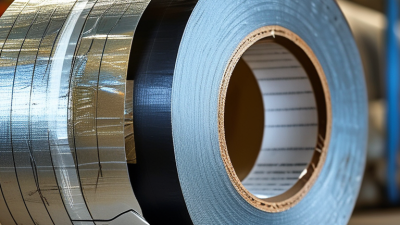
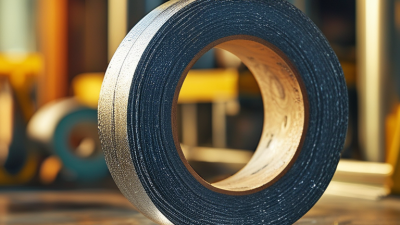
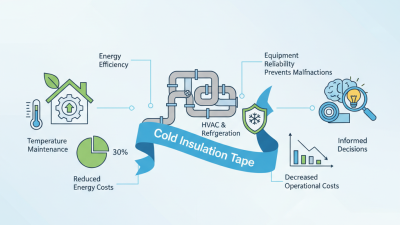
Cold insulation tape is a flexible sealing material for chilled pipes, ducts, valves, and irregular fittings. Most versions use closed-cell elastomeric foam, acrylic adhesive, and a vapor-resistant outer surface. It wraps around difficult joints. The tape does not create cold. It slows heat entering the system. Its closed cells trap still air, while the adhesive closes gaps that invite condensation. A continuous vapor barrier matters because wet insulation conducts heat faster and loses strength. The IEA’s 2023 Buildings report estimates that buildings consume about 30% of global final energy, making thermal losses commercially important.

Installation experience shows performance depends more on continuity than appearance. Clean the pipe. Keep the tape tight. Overlap edges consistently, especially around elbows and clamps. Do not stretch foam aggressively; thinning can create weak thermal spots. For OEM Cold Insulation Tape, buyers should request thermal conductivity, service-temperature range, peel adhesion, and water-vapor transmission data. ASTM C518 testing commonly measures thermal conductivity, while ASTM E96 evaluates water-vapor transmission. The ASHRAE Handbook—Refrigeration emphasizes sealed insulation joints for refrigerated systems, because moisture migration can reduce calculated thermal resistance. After cooling, inspect for sweating, lifted seams, or brittle adhesive. One limitation deserves honesty. Tape cannot correct poor pipe design or insufficient insulation thickness. Field results vary with humidity, surface preparation, and installer pressure.

Key Performance Standards for Evaluating Insulation Tape

Top Cold Insulation Tape Manufacturers for Global Buyers

Key Performance Standards for Evaluating Insulation Tape

Cold insulation tape should be judged by measured performance, not attractive packaging. Start with thermal conductivity, service temperature, and thickness tolerance. A tape used around chilled pipes may face condensation, vibration, and repeated temperature changes. Its adhesive must remain flexible below the stated minimum temperature. Check whether the manufacturer reports testing under realistic humidity conditions.

Electrical insulation requires additional evidence. Review dielectric strength, volume resistivity, and insulation resistance after aging. Tensile strength and elongation show how the tape handles pulling during installation. Peel adhesion matters on metal, coated surfaces, and rough joints. A strong initial bond is useful, but long-term adhesion is more important. Ask for test methods based on recognized IEC, ASTM, or EN requirements.

Look closely at batch consistency. Reliable suppliers should provide thickness records, test reports, and clear storage instructions. Roll width can affect installation speed. Uneven edges can create small gaps. Those gaps matter. For low-temperature systems, evaluate water absorption, vapor resistance, flame behavior, and UV stability when exposed areas are possible. Laboratory figures do not always predict field performance. I have seen tapes meet a datasheet value yet fail after poor surface cleaning. That is why trial application, controlled conditioning, and inspection after several temperature cycles remain necessary. Manufacturers should explain test limits openly, including results that are less impressive.

Main Types of Cold Insulation Tape for Industrial Use

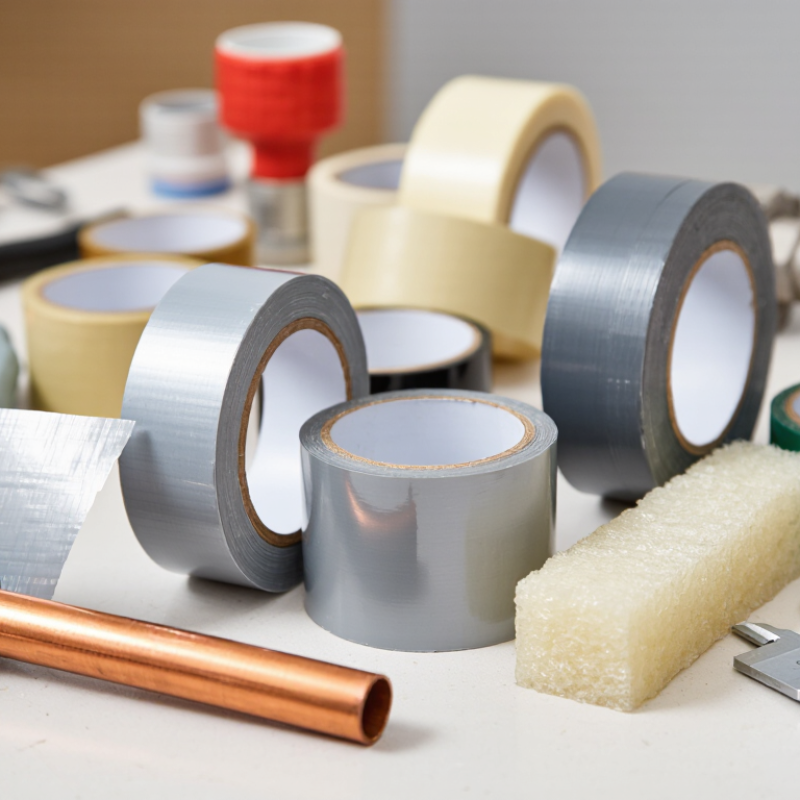
Industrial cold insulation tape comes in several forms, and each suits a different working condition. Elastomeric foam tape is common on chilled-water pipes, valves, and air-conditioning joints. Its closed-cell structure limits moisture entry and reduces condensation. It remains flexible around elbows and uneven surfaces. Polyethylene foam tape offers a lighter option for ductwork and refrigerated equipment. However, it may compress under strong pressure. That detail is easy to overlook.

Butyl rubber tape provides strong adhesion and reliable vapor sealing around seams, penetrations, and metal fittings. It works well where surfaces are slightly irregular, but dust can weaken its bond. Foil-faced insulation tape adds a reflective outer layer and improves protection against moisture, light, and minor abrasion. Reinforced versions are useful near service areas with frequent handling. Aerogel-based tape offers excellent thermal performance in narrow spaces, although its higher cost requires careful project planning. ODM Cold Insulation Tape can be developed with selected thicknesses, adhesives, liners, and reinforcement for specific industrial layouts.

Site experience shows that tape selection should follow temperature, surface material, humidity, and expected movement. Clean, dry metal usually gives the most dependable bond. Overlap matters. A small gap can become a condensation path during long operating cycles. I have also seen installers choose a very strong adhesive that damaged delicate insulation during maintenance. Strong­er is not always better. Testing a short sample section remains a practical step before full installation.

How to Assess Manufacturers’ Quality and Production Capabilities

Top Cold Insulation Tape Manufacturers for Global Buyers

A reliable Cold Insulation Tape Factory should provide traceable evidence, not polished promises. Request recent test reports for thermal conductivity, adhesion, tensile strength, and aging resistance. Check whether the reports match the exact tape structure and thickness you will purchase. Generic documents can hide important differences.

Inspect the production site, even through a live video audit. Look for clean coating lines, controlled storage areas, and calibrated testing equipment. Ask how operators measure adhesive weight and foam thickness during production. A capable manufacturer should explain batch controls, inspection frequency, and rejected-material handling in clear language. Ask for sample rolls from different production dates. One excellent sample proves little.

Production capacity needs practical verification. Review monthly output, lead times, spare-machine availability, and experience with seasonal demand. Confirm whether critical materials come from stable suppliers. Check packaging strength by examining crushed cartons and exposed roll edges. Small details matter. Also review the factory’s corrective-action records. Problems happen in real manufacturing; honest records show how quickly the team identifies and fixes them.

Do not rely only on an impressive facility tour. I have seen factories display modern equipment while using weak process controls. That gap deserves attention. Compare pilot samples with mass-production samples, then test them under low-temperature, humidity, and handling conditions. Clear specifications, repeatable results, and responsive technical communication offer stronger evidence than sales claims.

Top Cold Insulation Tape Manufacturers for Global Buyers - How to Assess Manufacturers’ Quality and Production Capabilities

Practical, brand-neutral assessment benchmarks for comparing cold insulation tape suppliers, validating product quality, and reviewing manufacturing capabilities before purchase.

Assessment Category Evaluation Dimension Recommended Buyer Benchmark Verification Evidence to Request Priority
Material and Construction Backing Material The backing should be suitable for the intended temperature range, moisture exposure, mechanical stress, and electrical or thermal insulation application. Common constructions include PVC, polyester, polyimide, fiberglass, polyethylene, and elastomeric films. Technical data sheet, material declaration, backing thickness specification, and application temperature statement. High
Adhesive System The adhesive type should be matched to the application. Acrylic adhesives generally provide good aging and temperature resistance, while rubber-based systems may offer higher initial tack. The adhesive should remain bonded without excessive ooze, brittleness, or residue. Adhesive chemistry declaration, peel-adhesion results, technical data sheet, and sample evaluation after temperature cycling. High
Thickness Uniformity The supplier should define nominal total thickness and tolerance. A controlled thickness profile is important for dielectric spacing, wrapping consistency, thermal performance, and automated converting. Quality-control records, calibrated micrometer readings, roll-to-roll thickness data, and agreed inspection limits. High
Surface and Edge Quality The tape should be free from wrinkles, telescoping rolls, adhesive contamination, pinholes, edge cracks, fish-eyes, liner damage, and visible foreign particles. Pre-shipment inspection report, retained production samples, defect classification standard, and packaging photographs. Medium
Release Liner Performance For linered products, the liner should unwind smoothly, separate consistently, and protect the adhesive during storage and conversion without transferring coating residue. Unwind test results, liner release-force data, storage samples, and converter feedback. Medium
Performance and Testing Service Temperature The published operating range must cover the actual application conditions, including minimum temperature, maximum temperature, thermal cycling, and expected exposure duration. Do not rely on a generic “cold resistant” claim without test conditions. Test method, conditioning time, temperature profile, application substrate, and signed laboratory report. High
Peel Adhesion Peel adhesion should be reported with the substrate, peel angle, peel speed, dwell time, and test temperature. Results should be evaluated both at room temperature and after cold exposure. Peel-adhesion test report based on a recognized method such as ASTM D3330 or an equivalent ISO method. High
Tensile Strength and Elongation The tape should provide sufficient tensile strength for installation while maintaining the elongation required for conforming to curved, irregular, or jointed surfaces. Tensile and elongation data with specimen dimensions, pulling speed, temperature, and test direction. Medium
Dielectric Strength For electrically insulating applications, dielectric strength should be tested at the specified thickness and under controlled conditions. The buyer should confirm whether the result is reported in kV or kV/mm. Electrical test report, thickness measurement, conditioning requirements, and test standard such as ASTM D149 or IEC 60243-1. High
Moisture and Environmental Resistance The construction should resist humidity, condensation, water exposure, corrosion-promoting environments, and the chemicals expected in service. Performance must be checked after exposure rather than inferred from material names. Humidity-aging, water-immersion, corrosion, and chemical-compatibility test results relevant to the final application. High
Aging and Thermal Cycling A capable supplier should evaluate adhesion, flexibility, appearance, and electrical or thermal performance before and after accelerated aging and repeated hot-cold cycles. Aging protocol, before-and-after performance data, failure criteria, and representative samples from aged lots. High
Production Capability Coating and Lamination Control Production should use controlled adhesive coating, drying, curing, and lamination processes with documented settings and online inspection where appropriate. Process flow chart, coating-line specifications, batch records, viscosity controls, and coating-weight inspection data. High
Slitting and Converting Accuracy Finished rolls should meet agreed width, length, core, winding, splice, and roll-hardness requirements. Slitting accuracy is particularly important for automated assembly and high-volume installation. Slitting tolerance records, roll inspection checklist, core specifications, and sample finished rolls. Medium
Capacity and Scalability The manufacturer should demonstrate sufficient coating, curing, slitting, storage, and packing capacity for both trial quantities and forecast production. Capacity claims should distinguish installed capacity from available capacity. Monthly capacity statement, current utilization range, equipment list, production schedule, and scale-up plan. High
Lot Traceability Every shipment should be traceable to raw materials, production date, line, operator or shift, inspection results, and packaging records. Traceability should remain available for the agreed retention period. Example certificate of analysis, lot-number format, material-inventory records, and mock recall procedure. High
Packaging and Export Readiness Packaging should protect rolls from dust, moisture, crushing, UV exposure, and temperature extremes during international transport. Cartons and pallets should be suitable for the selected shipping route. Packaging specification, drop or compression test information, pallet photographs, export labeling, and container-loading procedure. Medium
Quality Management Quality Management System A documented quality system should control incoming materials, process parameters, nonconforming products, corrective actions, calibration, and customer complaints. Valid quality-management certificate, audit summary, calibration records, corrective-action examples, and inspection plans. High
Incoming Material Inspection Backing films, adhesives, liners, cores, and packaging materials should be inspected against defined specifications before release to production. Incoming inspection standards, supplier approval procedure, material certificates, and quarantine-release records. High
Laboratory and Calibration Capability The supplier should maintain calibrated equipment for thickness, width, adhesion, tensile strength, elongation, temperature conditioning, and electrical testing when relevant. Equipment list, calibration certificates, laboratory test procedures, and internal-versus-external testing matrix. High
Batch Consistency Performance should remain consistent across production lots. Acceptance criteria should be agreed in advance for appearance, dimensions, adhesion, mechanical properties, and application performance. At least three representative lot reports, control charts, certificate-of-analysis samples, and third-party inspection option. High
Commercial and Compliance Review Technical Documentation Documentation should clearly state product construction, thickness, width, roll length, temperature range, adhesive type, storage conditions, shelf life, test methods, and limitations. Current technical data sheet, safety data sheet where applicable, certificate of analysis, and installation instructions. High
Regulatory and Market Requirements The product and raw materials should meet the legal, environmental, electrical, fire, or sector-specific requirements of the destination market and end-use industry. Declaration of conformity, restricted-substance statement, relevant test reports, and destination-market compliance documents. High
Minimum Order Quantity and Lead Time Commercial terms should distinguish standard stock items from custom constructions. Lead times should cover sampling, tooling or formulation approval, production, inspection, and export preparation. Formal quotation, production schedule, sample lead time, standard MOQ, custom MOQ, and contingency plan for delays. Medium
After-Sales Technical Support The supplier should provide application guidance, complaint response, root-cause analysis, corrective action, and replacement or credit procedures for verified nonconformities. Complaint-handling procedure, response-time commitment, technical contact details, and anonymized corrective-action examples. Medium
Buyer Evaluation Note: The benchmarks above are assessment criteria rather than claims about any specific manufacturer. Final acceptance limits should be defined according to the application, substrate, temperature profile, electrical requirements, applicable standards, transport conditions, and customer validation results. A practical qualification process should include document review, sample testing, pilot production, and inspection of the first commercial lots.

Leading Regions and Suppliers in the Global Insulation Tape Market

Global cold insulation tape sourcing is increasingly concentrated in Asia-Pacific, where strong electronics, refrigeration, and construction supply chains support high-volume production. MarketsandMarkets estimates the broader thermal insulation market could grow from about USD 69 billion in 2023 to more than USD 93 billion by 2028. This category includes materials beyond tape, but it signals expanding demand for efficient temperature control.

China, Japan, South Korea, and India remain important supplier bases. Their manufacturers commonly offer rubber, polyethylene, and foil-backed tapes for chilled-water lines, HVAC systems, and low-temperature equipment. Export buyers should examine adhesive performance below freezing, moisture resistance, tensile strength, and storage life. Cheap tape can fail quickly.

North America and Europe remain influential specification markets. The U.S. favors products tested for mechanical durability and fire performance, while European buyers often request documented chemical compliance and consistent technical data. Grand View Research identifies Asia-Pacific as a leading insulation market region, supported by industrial construction and infrastructure investment. Regional demand is not identical.

A reliable supplier should provide batch records, laboratory results, and clear application limits. ISO 9001 certification can support process confidence, but it does not prove field performance. Independent testing matters. Buyers should also compare peel strength after condensation exposure, because dry-room tests may create false confidence. This is an area where many purchasing decisions remain too simple.

Asia-Pacific represents the largest demand center for cold insulation tape, supported by extensive HVAC, refrigeration, LNG, and industrial infrastructure activity. North America and Europe remain important markets because of mature energy-efficiency standards and renovation demand. The figures show estimated regional demand shares and exclude individual company or brand sales.

Buyer Checklist for Selecting a Reliable Manufacturer

Choosing a reliable Cold Insulation Tape Supplier requires more than comparing prices. Ask how long the factory has produced low-temperature insulation materials. Request application records for pipes, valves, and chilled equipment. A serious manufacturer should explain tape thickness, adhesive type, temperature range, and moisture resistance clearly. Vague answers are a warning sign. Ask for recent test reports, batch numbers, and sample rolls from normal production. Check whether the backing stays flexible when handled in a cold room. Test it cold.

Inspect quality controls before signing a contract. The manufacturer should track incoming materials, coating conditions, curing time, and final roll width. Request an inspection plan covering peel strength, tensile strength, adhesion, and aging tests. Independent laboratory results can add confidence, but they should match the actual product code. Confirm packaging details too. Damp cartons or loose cores can damage tape before installation. Details matter. A factory audit, video call, or third-party inspection helps when travel is difficult.

Reliable communication matters during urgent deliveries. Confirm lead times, minimum order quantities, replacement procedures, and export documents in writing. Ask how complaints are investigated, not merely how they are answered. I have found that fast replies do not always indicate strong production control. One overlooked detail can be the inner core size. It may not fit your dispenser. Ask for evidence. Leave room for doubt, test a small order, and record results from actual installation. Review performance after temperature cycling and handling.

High-Temperature Battery Easy-to-Pull Tape: Features, Applications, and Selection Guide

High-Temperature Battery Easy-to-Pull Tape is designed for battery assembly, electronic devices, energy storage modules, and other applications requiring reliable bonding under elevated temperatures. Its high-viscosity adhesive provides strong initial adhesion and durable holding power, helping secure battery components during installation and long-term use. The white transparent adhesive layer offers a clean, attractive appearance while providing high transparency, water resistance, and dust protection.

A double-layer release paper structure makes the tape easy to tear by hand without scissors or other cutting tools, improving efficiency during assembly. After the battery has been firmly bonded for an extended period, the integrated stretch strap allows the tape to be pulled and released smoothly. The adhesive can be removed with minimal effort and leaves little or no residue, helping protect battery surfaces and simplifying maintenance or replacement.

When selecting this tape, consider the operating temperature, required bonding strength, battery surface material, tape width, thickness, and expected service time. Different specifications can be customized to suit compact electronic products, larger battery packs, or specialized assembly processes. Proper sizing of the adhesive area and pull tab can improve holding stability while ensuring convenient removal when needed.

FAQS

What types of cold insulation tape suit industrial applications?

Elastomeric foam tape suits chilled-water pipes, valves, and air-conditioning joints. Its closed cells reduce moisture entry and condensation. Polyethylene foam tape is lighter but may compress under pressure. Butyl rubber tape seals seams and metal fittings effectively. Foil-faced tape adds moisture and abrasion protection. Aerogel-based tape performs well in narrow spaces, but costs more.

How should tape selection match site conditions?

Consider operating temperature, surface material, humidity, and expected movement. Flexible tape suits elbows and uneven surfaces. Clean, dry metal usually provides the strongest bond. Dust can weaken adhesive performance. Stronger adhesive is not always safer.

Why does overlap matter during installation?

Proper overlap helps prevent gaps that may become condensation paths. This matters during long cooling cycles. Press the tape firmly around joints and penetrations. Check edges carefully. Tiny gaps can matter.

What quality documents should a manufacturer provide?

Request recent reports for thermal conductivity, adhesion, tensile strength, and aging resistance. Confirm that reports match the exact thickness and structure purchased. Generic documents may hide important differences. Batch numbers improve traceability. One excellent sample proves little.

How can buyers evaluate production capability?

Review coating lines, storage areas, and testing equipment through an onsite or live video audit. Ask how workers control adhesive weight and foam thickness. Check monthly output, lead times, and spare-machine availability. Request samples from different production dates. Modern equipment alone is not enough.

What factory quality controls deserve attention?

The factory should track incoming materials, coating conditions, curing time, and final roll width. Request inspection records for peel strength, tensile strength, adhesion, and aging. Review rejected-material handling and corrective-action records. Problems happen. Honest records show how they are managed.

What should buyers test before placing a large order?

Order a small sample first and test it in a cold room. Check flexibility, adhesion, moisture resistance, and handling performance. Compare pilot samples with mass-production samples. Test after temperature cycling. I would not rely on appearance alone.

Which packaging and delivery details should be confirmed?

Confirm lead times, minimum order quantities, replacement procedures, and export documents in writing. Inspect cartons for dampness and crushed edges. Check the inner core size for dispenser compatibility. Loose cores can create installation trouble. Fast replies do not always mean strong production control.

Conclusion

Cold Insulation Tape is designed to reduce heat transfer, control condensation, and protect chilled pipes, ducts, tanks, and equipment in industrial environments. Its effectiveness depends on insulation structure, adhesive stability, moisture resistance, temperature range, flexibility, and long-term durability. Common options include elastomeric foam tape, foil-faced tape, vapor-barrier tape, and specialized low-temperature adhesive systems, each suited to different installation conditions and service requirements.

When comparing manufacturers, buyers should review testing procedures, material consistency, production capacity, quality-control systems, customization options, packaging, and technical support. Global suppliers may differ in raw-material sourcing, manufacturing expertise, certifications, delivery capability, and responsiveness to project specifications. A reliable selection process should confirm product performance through technical datasheets, sample testing, batch traceability, application guidance, and clear warranty terms. By evaluating both product standards and supplier reliability, industrial buyers can choose insulation tape that supports energy efficiency, prevents moisture-related damage, and performs consistently throughout its intended service life.

Isabella

Isabella

Isabella is a dedicated marketing professional at Dongguan Xinyouwei Adhesive Products Co., Ltd. With a deep passion for the adhesive manufacturing industry, she possesses extensive knowledge of the company’s product range and its applications. Her expertise not only enhances the visibility of the......
Previous 10 Best Copper Foil Tapes for Global Buyers?