Hey, if you're looking for a reliable solution to handle high temperatures, check out High Temp Sealant Tape. It’s designed to protect, seal, or join materials that are exposed to really hot environments. You often find it in stuff like furnace repairs, exhaust pipes, ductwork in HVAC systems, heat shields, industrial ovens, and insulation meant for high temps. Unlike your regular sticky tape, this stuff is made with heat-resistant backing and special adhesives that can handle the heat. Of course, the exact kind varies quite a bit depending on what you need.
For example, say you have a metal duct joint near a furnace outlet — regular tape might soften, shrink, or just let go over time. But High Temp Sealant Tape can help seal small gaps and cut down on heat escaping, especially if the surface is cleaned and prepped properly. Some types even work temporarily to protect wires, pipes, glass, or painted metal. Just a heads-up, though, tape isn’t always a substitute for mechanical fasteners or proper fire-stopping materials.
When choosing your tape, pay attention to its temperature ratings—check how hot it can tolerate continuously, or for short bursts. Also, look at what the backing material is—copper, aluminum, fiberglass, or silicone tapes will all behave differently. This stuff really matters. A tape rated for 500°F might be fine in normal conditions but could fail if it’s exposed to flames, vibration, or repeated heating and cooling cycles. Always follow the manufacturer’s instructions as your best guide.
In actual use, it’s best to clean the surface from dust, oil, rust, and moisture before applying the tape. Firm, even pressure helps it stick better, especially around corners or uneven seams. Sometimes overlapping the tape can help reinforce the seal, but be careful not to pull too tight—that can cause the tape to lift later on, which is a common mistake.
And here’s the bottom line—there’s no one-size-fits-all high-temperature tape. Picking one just based on temperature might give you a false sense of security. Before applying, think about your specific situation—what surface you’re working with, how it moves, and what kind of exposure it’ll get. After heating and cooling cycles, make sure to check the seal—if the adhesive cracks, hardens, or starts to peel away, it’s time to replace it.
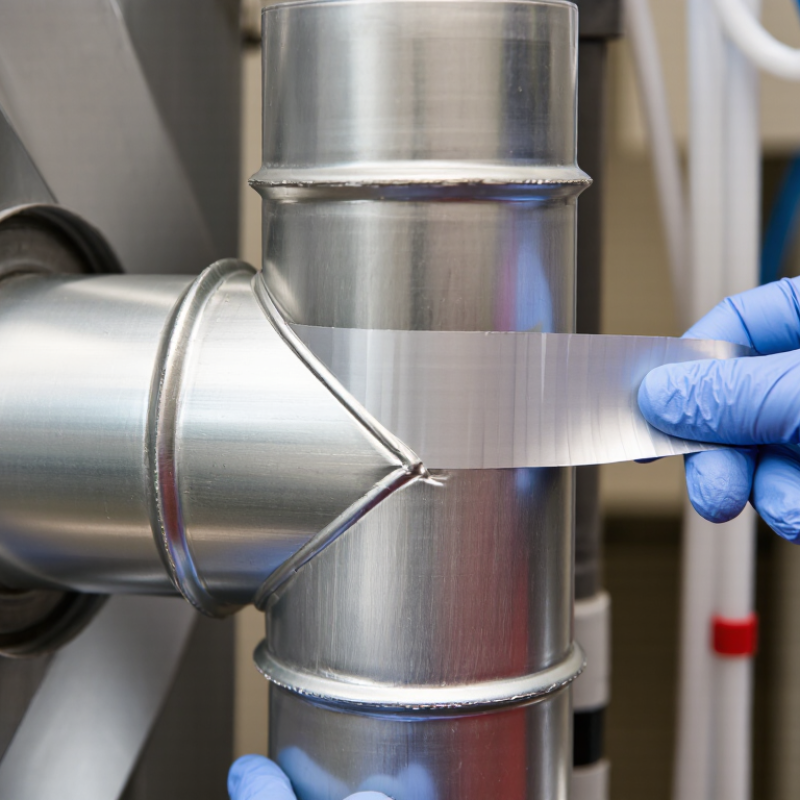
High-temperature sealant tape is an engineered tape designed to seal, insulate, or protect joints exposed to heat. It commonly combines a heat-resistant backing with silicone, acrylic, or another specialized adhesive. Some versions use glass cloth, fluoropolymer film, or metal foil for extra strength. The right structure depends on temperature, pressure, surface material, and exposure time.
In practical maintenance work, this tape can seal oven doors, heating elements, exhaust connections, duct seams, wiring, and pipe insulation. It may reduce air leakage and protect surfaces from moisture, chemicals, or abrasion. However, it is not a universal repair solution. A tape rated for 200°C may fail quickly near a hotter heating chamber. Adhesion can also weaken on dusty, oily, or uneven surfaces.
Clean and dry the surface before application. Apply steady pressure, then inspect the edges for lifting or wrinkles. Leave enough overlap around the joint. Small details matter. I have seen otherwise suitable tape fail because the surface was still warm during installation. Temperature ratings also need careful reading, since continuous and short-term limits can differ. For customized widths, backings, or adhesive systems, OEM High Temp Sealant Tape may fit specialized production requirements more accurately. Yet specifications should be verified through technical data and actual operating conditions, not guessed from the label.
| Application Area | Typical Purpose | Common Temperature Exposure | Suitable Tape Characteristics | Important Considerations |
|---|---|---|---|---|
| HVAC and Ductwork | Sealing joints, seams, insulation facings, and small gaps in air-handling systems. | Approximately 60–150°C, depending on the location and system design. | Strong adhesion, conformability, moisture resistance, and compatibility with metal or insulation surfaces. | The tape must be rated for continuous operating temperature rather than only short-term exposure. |
| Automotive and Engine Compartments | Protecting wires, bundling components, insulating parts, and sealing localized joints. | Often 80–200°C, with higher temperatures possible near exhaust components. | Heat resistance, vibration tolerance, chemical resistance, and reliable adhesion to coated metals or plastics. | Check resistance to oil, fuel, coolant, vibration, and thermal cycling before use. |
| Electrical and Electronic Assemblies | Insulating, masking, protecting connections, and securing components during thermal processing. | Commonly 100–260°C, depending on the assembly or process. | Electrical insulation, low residue, dimensional stability, and resistance to soldering or reflow temperatures when required. | Verify dielectric strength, clean removal, and compatibility with circuit-board materials. |
| Powder Coating and Paint Masking | Masking holes, edges, threads, and selected areas during curing or heat treatment. | Typically 150–230°C for many curing cycles. | Clean removal, heat-stable backing, controlled adhesion, and resistance to coating chemicals. | A tape that leaves adhesive residue can affect coating quality and require additional cleaning. |
| Glass, Ceramic, and Kiln Work | Temporary holding, edge protection, masking, and positioning during controlled heating. | May range from 200°C to above 500°C, depending on the process. | A heat-resistant backing, low residue, and performance suited to the specific heating cycle. | Standard adhesive tapes are not automatically suitable for kiln temperatures; always follow the technical rating. |
| Industrial Pipe and Flange Areas | Temporary sealing, insulation support, bundling, and protection during maintenance or installation. | Approximately 100–250°C in selected industrial environments. | High-temperature stability, resistance to moisture and chemicals, and strong grip on clean metal surfaces. | Tape is generally intended for sealing or support, not as a replacement for pressure-rated mechanical joints. |
| Aerospace and High-Temperature Fabrication | Protecting surfaces, holding insulation, masking during processing, and managing wire or component assemblies. | Application-specific; exposure may exceed 260°C in localized areas. | Low outgassing, flame resistance, dimensional stability, and documented performance under thermal cycling. | Use only materials approved for the required specification, substrate, and operating environment. |
| General Repair and Maintenance | Temporary bundling, surface protection, insulation repair, and sealing around moderately hot equipment. | Commonly below 150°C, depending on the tape construction. | Easy application, flexible backing, dependable adhesion, and resistance to aging. | Do not apply to hot surfaces unless the instructions specifically permit it; clean and cool the surface first. |
Heat-conductive double-sided tape provides a practical solution for high-temperature insulation and efficient heat dissipation in compact electronic assemblies. Its thermally conductive adhesive layer helps transfer heat away from critical components while maintaining reliable insulation between electrically sensitive parts. In integrated circuit packages, the tape can support stable contact between the chip and a heat-spreading structure, reducing thermal resistance without adding bulky mechanical fasteners. It is also suitable for heat sink interface accessories, where its flexible construction helps accommodate minor surface irregularities and improve contact efficiency.
This tape can be used in battery thermal management systems to help distribute heat across selected areas and support safer, more consistent operating temperatures. In LED lighting, it assists heat transfer from the light source to the surrounding thermal structure, helping maintain performance during extended operation. For radiator-to-thermal-interface applications that require non-bonding contact, it can serve as a thin, adaptable interface layer when combined with an appropriate mounting design. Its flexibility also makes it useful for bonding curved, lightweight, or vibration-sensitive components, while its high-temperature resistance supports demanding environments.
It seals narrow gaps around heated pipes, oven panels, electrical connections, and exhaust components. It also reduces exposure to heat, moisture, and vibration. Small gaps matter.
Fiberglass adds strength and resists tearing. PTFE provides a smooth, non-stick surface. Polyimide film suits electrical insulation and tight spaces. Silicone rubber allows movement. Aluminum foil reflects radiant heat and resists moisture.
Silicone adhesive stays flexible during heating and cooling. It can bond to uneven surfaces. Acrylic adhesive may offer stronger bonding, but its limits depend on the formulation. The backing alone is not enough.
Not completely. A rating may describe brief exposure rather than continuous service. Check both continuous and peak temperatures. Leave a conservative safety margin.
Check temperature, pressure, chemicals, moisture, and surface movement. Also consider the joint shape and required thickness. Damaged threads need repair, not more tape.
PTFE tape suits many threaded connections and resists numerous chemicals. Wrap it in the tightening direction. Keep it away from the first thread. Do not use tape to replace a pressure-rated gasket.
Remove dust and oil completely. Dry the surface. Press the tape firmly across the joint. Avoid wrinkles and trapped air. A clean surface often matters more than an impressive specification.
Inspect the tape after the first heating cycle. Look for lifting edges, leaks, shrinking, or residue. Record the tape type, batch details, temperature, and inspection result. I would test a small section first, because labels can mislead.
High Temp Sealant Tape is a specialized sealing material designed to maintain adhesion, flexibility, and resistance under elevated temperatures. It works by forming a tight barrier over joints, seams, threads, or surfaces, helping prevent air, moisture, chemicals, and heat from passing through. Depending on the intended use, it may be made from materials such as silicone, PTFE, fiberglass, aluminum foil, or other heat-resistant polymers. Each material offers different levels of temperature tolerance, strength, flexibility, and chemical resistance.
This tape is commonly used in automotive systems, electrical equipment, industrial machinery, HVAC installations, ovens, exhaust assemblies, and manufacturing processes. Its performance depends on temperature exposure, pressure, surface condition, movement, and contact with chemicals or moisture. To choose the right product, users should consider the operating temperature range, substrate compatibility, required thickness, adhesive strength, and environmental conditions. Proper application requires cleaning and drying the surface, applying the tape evenly without unnecessary stretching, and pressing it firmly to create a reliable seal.