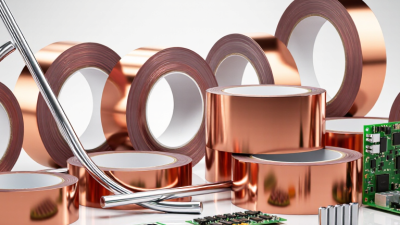
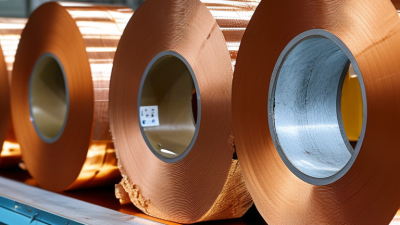
Choosing the right Copper Foil Tape supplier in China isn't just about comparing prices or scrolling through shiny product catalogs. Honestly, the real test starts when you actually get the tape in your hands. You wanna feel that smooth foil, see clean edges, and make sure it sticks well—no peeling or awkward tearing of the liner. The supplier's capability really matters here.
Dr. Michael Chen, who’s been working as a materials and adhesive engineer for over fifteen years, always reminds folks: “A good copper foil tape should perform consistently once you're using it, not just look good sitting on a shelf.” It's a small point, but totally easy to overlook. Sometimes, a supplier's specs look great, but their quality can vary from batch to batch—that’s something you definitely want to watch out for.
A trustworthy manufacturer from China should be upfront about things like copper purity, foil thickness, type of adhesive, electrical resistance, temperature tolerance, and how well it ages. And, of course, they should have testing records that are clear and easy to trace. Whether you're doing electromagnetic shielding, grounding, craft projects, or electrical work, these little details really matter. If you're eyeing that double-sided conductive copper foil tape, then it's even more important—both sides need to keep their conductivity steady.
It’s also about asking the tough questions. Can they send you current production samples? Do they handle slit, coat, inspect, and pack in-house? Can they accommodate custom widths without messing up their delivery schedule?
Look, nobody’s perfect. Even seasoned buyers sometimes jump on a quote that looks too good to be true, and that’s a mistake. The best supplier isn’t just about low prices—it’s about solid tech, quick responses, consistent capacity, and honesty when issues come up. This guide digs into those qualities and shows you what sets apart a genuinely reliable Copper Foil Tape supplier from just a pretty listing.
What Is Copper Foil Tape and Where Is It Used?
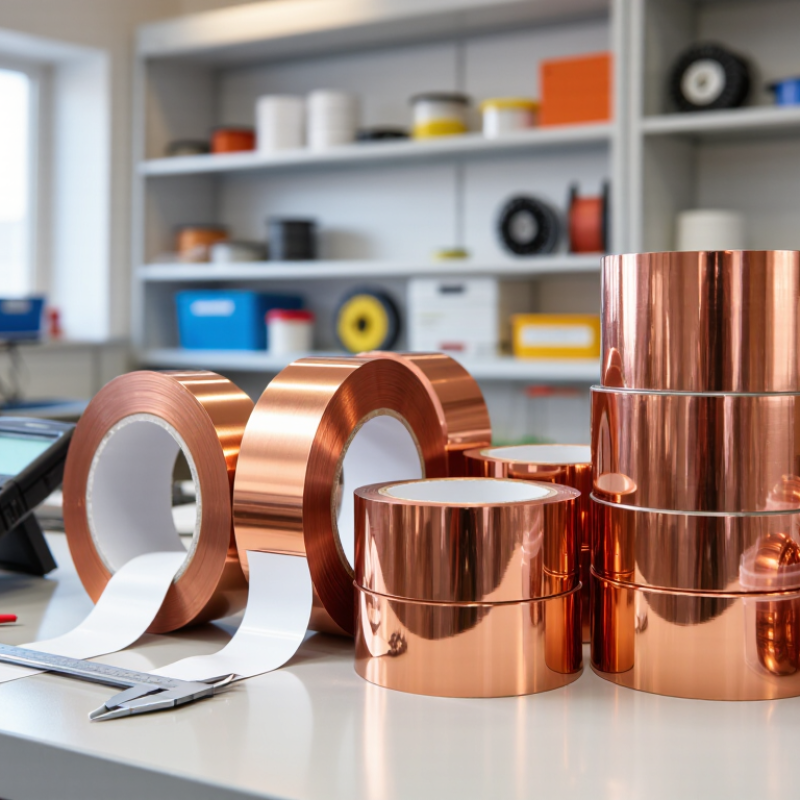
Copper foil tape is a thin copper strip with a pressure-sensitive adhesive backing. It can conduct electricity across seams, joints, and irregular surfaces. Some versions conduct through the copper only. Others use conductive adhesive for continuous electrical contact.
In practical work, Conductive Copper Foil Tape appears in EMI shielding, grounding, transformer insulation, cable repair, and small electronic prototypes. Its flexible foil follows curved edges better than rigid metal sheets. In theatre and craft settings, it can also support low-voltage decorative circuits. The International Copper Study Group reported global refined copper usage above 26 million metric tons in 2023. That scale reflects copper’s continuing role in electrical systems, although tape represents only a small application segment.
Performance depends on more than copper thickness. Buyers should check foil purity, adhesive conductivity, peel strength, temperature resistance, and shielding effectiveness. ASTM D3330 can help evaluate adhesive peel performance. ASTM D4935 is commonly used for electromagnetic shielding measurements. A reliable Chinese supplier should provide test reports, batch records, and clear tolerance data. Ask for samples before placing a large order. Paperwork can look excellent. The first sample may still expose weak adhesion, uneven edges, or poor contact through oxidation. In my experience, the best supplier is not always the cheapest; it is the one that explains these limitations honestly and responds consistently.
Which Standards Define High-Quality Copper Foil Tape?
High-quality copper foil tape is defined by measurable standards, not a shiny surface. ASTM D1000 evaluates pressure-sensitive tape properties, including adhesion, tensile strength, elongation, and electrical resistance. These results should appear in a batch test report, with test methods and conditions clearly stated.
IEC 60454-2 is also important for electrical tapes. It covers dimensions, adhesion, dielectric performance, and mechanical behavior. For EMI shielding applications, stable surface resistance matters more than appearance. A technical report should show resistance across the foil surface, not only one convenient test point. Uneven readings may indicate oxidation, poor coating, or inconsistent rolling.
Look for traceable data.
UL 510 can support evaluations of insulating adhesive tapes, although its suitability depends on the tape structure and application. Industry testing guidance also recommends checking temperature aging, peel adhesion, and shielding effectiveness after installation. A tape that performs well at room temperature may fail after heat cycling. That is easy to overlook.
In practical sourcing, request ASTM or IEC test reports, material thickness tolerance, adhesive type, and lot identification. Supplier claims alone are weak evidence. Some reports are incomplete, too. Verify whether the tested sample matches the production grade, because a laboratory sample can be better than the delivered roll.
How to Evaluate Copper Foil Tape Suppliers in China?
Choosing the best Copper Foil Tape supplier in China requires more than comparing prices. Start with the tape’s construction: copper purity, foil thickness, adhesive type, liner quality, and roll dimensions. IPC-4562A provides useful copper-foil specifications for electronics applications. Ask suppliers to match your required thickness and tolerance in writing.
Material traceability also matters. The USGS Mineral Commodity Summaries 2024 reported about 22 million metric tons of global mined copper production in 2023. This scale does not guarantee stable quality. Request batch certificates, inspection records, and adhesive test results. A reliable factory should explain how it controls oxidation, edge damage, and uneven coating. During sample evaluation, test peel strength, electrical continuity, shielding performance, and residue after removal. Keep samples for humidity and heat exposure. Real conditions reveal weaknesses.
Tips: Check whether the supplier owns coating and slitting equipment. Visit the production line if possible. Compare three batches, not one. The International Copper Study Group projected refined copper demand growth in 2024 and 2025, so raw-material pressure may affect quotations. Ask how pricing changes with copper costs. Also inspect packaging; crushed cores can ruin a clean installation. I would not trust a perfect laboratory sheet alone. One overlooked detail can still fail during field use.
What Manufacturing Capabilities Should a Supplier Provide?
A capable copper foil tape supplier should control the process from foil selection to finished roll. Ask whether it can document foil thickness, adhesive type, backing, and release liner for each specification. IPC-4562A, the industry specification for copper foil used in printed boards, identifies properties such as thickness, tensile strength, and elongation. These are useful benchmarks, though tape performance also depends on adhesive and surface treatment.
Production equipment matters. Look for controlled slitting that keeps roll width consistent and limits burrs along the edges. A clean coating line, stable curing conditions, and inspection equipment for thickness and coating defects help reduce variation between batches. Ask for sample test records covering peel adhesion, electrical continuity, and temperature resistance. Copper Development Association data lists annealed copper conductivity at about 100% IACS; this is a material reference, not proof that a finished tape will meet a particular application’s needs.
Traceability is important. A supplier should link each roll to its foil and adhesive batches, retain inspection records, and explain how it handles out-of-spec material. Request a small trial roll and test it on your actual surface; lab results can miss real-world issues. Even a well-equipped factory may struggle with a custom specification. Be cautious of claims without data.
Copper Foil Tape Manufacturing: Representative Foil Thicknesses
A supplier’s manufacturing capability includes controlling foil thickness and offering suitable gauge options. These are representative copper foil thicknesses; actual availability depends on the tape construction and supplier specifications.
How Do Price, Customization, and Minimum Orders Compare?
Price comparisons are meaningful only when tape specifications match.
Request the same thickness, width, adhesive type, roll length, and packing details from each supplier.
The USGS Mineral Commodity Summaries 2025 reports an average 2024 COMEX copper price of
$4.18 per pound, up from $3.85 in 2023. This helps explain why copper foil costs can shift, but raw copper alone does not set the finished tape price. Adhesive, converting, inspection, and freight also matter. Ask for a quote with each cost clearly stated.
Customization can include slit widths, liner choices, roll lengths, and packaging. For
Copper Foil Shielding Tape,
confirm whether the adhesive is conductive and request test details for electrical performance. Small specification changes may affect tooling and lead time. Minimum order quantities vary by supplier and by how much processing your order needs. Standard widths may be available in smaller quantities; custom slitting or printing may require more. Ask for sample rolls and the MOQ for repeat orders separately.
There is no universal figure.
I would not choose the lowest quote before checking its usable yield, inspection method, and tolerance range. That comparison is easy to miss.
Which Supplier Best Matches Your Project Requirements?
Choosing the best copper foil tape supplier in China depends on your project, not just the lowest quotation. Adhesive Copper Foil Tape may serve EMI shielding, grounding, stained glass, craft work, or heat-related applications. Each use requires different foil thickness, adhesive strength, conductivity, and surface compatibility. A supplier with technical experience should ask about your substrate, temperature range, roll size, and expected service life.
Request samples before placing a large order. Test the tape on your actual material, including painted panels, glass, plastic, or irregular surfaces. Check whether the adhesive peels cleanly after heat exposure and repeated handling. Ask for test reports, production tolerances, and clear inspection procedures. Reliable suppliers should explain their process instead of making broad claims. One detail is often missed: liner quality can affect cutting and application speed.
Tips: Prepare a short requirement sheet before contacting suppliers. Include width, thickness, adhesive type, shielding or conductivity needs, and monthly volume. Compare sample results, communication speed, packaging, and response to technical questions. A lower price may hide weak adhesion or inconsistent winding. I have found that practical trials reveal more than polished product sheets, although even a good test cannot predict every field condition. Leave room for adjustment.
Who Is the Best Copper Foil Tape Supplier in China? - Which Supplier Best Matches Your Project Requirements?
| Supplier Profile |
Copper Foil Type |
Typical Thickness |
Standard Width Range |
Adhesive Options |
Temperature Range |
Electrical Performance |
Customization Capability |
Typical MOQ |
Typical Lead Time |
Best Project Match |
Supplier A
High-volume manufacturer
|
Electrolytic copper foil |
0.035–0.10 mm |
5–600 mm |
Acrylic; conductive acrylic |
Approximately −20°C to 120°C |
Low-resistance copper backing; conductive adhesive available |
Slitting, die-cutting, custom roll length, liner selection |
500 rolls |
15–25 working days |
Large recurring orders |
Supplier B
Export-oriented converter
|
Rolled copper foil |
0.05–0.15 mm |
10–1,000 mm |
Acrylic; rubber-based options |
Approximately −10°C to 90°C |
Standard non-conductive adhesive; conductive grade by request |
Custom width, printed packaging, barcode labeling, export cartons |
100 rolls |
10–18 working days |
General industrial use |
Supplier C
Precision converting specialist
|
Electrolytic or rolled copper foil |
0.025–0.08 mm |
3–300 mm |
Conductive acrylic; high-temperature acrylic |
Approximately −40°C to 150°C |
Low surface resistance; conductive adhesive suitable for EMI grounding |
Tight-tolerance slitting, die-cut parts, tabs, sheets, custom liners |
50 rolls or 1,000 die-cut pieces |
12–20 working days |
EMI shielding and grounding |
Supplier D
Small-batch development supplier
|
Tin-plated or bare copper foil |
0.04–0.12 mm |
5–500 mm |
Acrylic; conductive fabric-compatible adhesive |
Approximately −20°C to 100°C |
Conductive and non-conductive grades available |
Prototype rolls, sample kits, short runs, custom packaging |
10–50 rolls |
5–12 working days |
Prototypes and low-volume projects |
Supplier E
Specialty high-temperature supplier
|
Rolled copper foil |
0.03–0.10 mm |
5–450 mm |
High-temperature acrylic; silicone-based option |
Approximately −40°C to 180°C |
Stable conductivity after thermal exposure; test data available by grade |
Heat-resistant adhesive systems, custom die cuts, protective liners |
100 rolls |
20–30 working days |
High-temperature applications |
Selection guidance:
Supplier C is generally the strongest match for EMI shielding and grounding, Supplier D for prototypes and small quantities, Supplier E for elevated-temperature environments, and Supplier A for stable, high-volume purchasing. The specifications shown are representative industry ranges and should be confirmed through the supplier’s current technical data sheet, samples, and quality documentation before approval.
Single-Sided Insulation Flame-Retardant Tape for Safer Thermal and Electrical Protection
Single-sided insulation flame-retardant tape is designed to provide safer thermal and electrical protection in demanding applications. Its insulating layer helps separate conductive surfaces, reduce the risk of unwanted electrical contact, and support reliable protection around wires, cables, components, and other exposed areas. The tape’s flame-retardant properties help slow the spread of flames when exposed to heat, making it suitable for environments where insulation and fire protection are essential.
Built for high-temperature conditions, the tape maintains strong performance across a wide operating range without easily losing its structure or protective function. Its good thermal stability helps it resist deformation during repeated heating and cooling, while its strong adhesion allows convenient application to clean, dry surfaces. The single-sided design also supports controlled installation, covering selected areas without adding unnecessary layers. It can be used in electrical assemblies, thermal insulation projects, equipment maintenance, and other applications requiring dependable flame-resistant protection.
Conclusion
Choosing the best Copper Foil Tape supplier in China requires more than comparing prices. Copper foil tape is widely used for electromagnetic shielding, electrical grounding, thermal management, craft projects, and industrial assembly. A reliable supplier should offer stable conductivity, strong adhesion, consistent thickness, clean cutting, and resistance to oxidation and temperature changes. Buyers should also review quality control procedures, material traceability, testing capabilities, and compliance with relevant industry standards.
Manufacturing flexibility is equally important. The right supplier should support different foil thicknesses, adhesive types, widths, lengths, die-cut shapes, liners, and packaging formats. Price, customization options, production capacity, lead time, and minimum order quantities should be evaluated together rather than separately. Ultimately, the best supplier is the one that matches your project’s technical requirements, budget, expected order volume, delivery schedule, and quality expectations while providing responsive communication and dependable after-sales support.